
For many years, the conversation around Northlake has focused on what is missing rather than what is quietly lining up in our favor. Stepping back and looking at the sequence of investments, a different picture begins to emerge.
A Quiet Sequence of Investments
Over the past decade, several foundational decisions have begun to align. The incorporation of the City of Tucker in 2016 added local control and a stronger community voice. In 2019, Emory Healthcare relocated major operations to Northlake, anchoring the area with a nationally respected institution and hundreds of daily employees, visitors, and room to grow.
In 2021, the Georgia Department of Transportation announced plans for a dedicated express lane exit at Northlake Parkway as part of the I-285 Eastside Express Lanes project. Each of these milestones stands on its own. Together, they quietly signal momentum.
Currently in the planning and environmental review phase, the I-285 Eastside Express Lanes project does not have a confirmed construction start date, but understanding what it is and why it’s significant is important.
What the Express Lanes Actually Are
The express lanes project will add optional tolled or managed lanes while keeping all existing general-purpose lanes free. These are a combination of at-grade and elevated, barrier-separated lanes designed to physically separate faster-moving regional traffic from local travel. There will be two lanes in each direction, ensuring that no one is stuck behind a slow or stalled vehicle.
More importantly, the project introduces reliability and an added layer of safety in everyday driving. This is not road widening. It is a new connection to a larger network.
Predictable travel times influence how employers think about location decisions, how hospitals move staff and patients, how service providers schedule work, and how families manage daily life. Reliability also tends to improve safety by reducing sudden lane changes, stop-and-go conditions, and weaving movements. It also reduces the number of drivers cutting through neighborhood streets when congestion builds. Improving traffic flow with a managed lane system has proven effects in cities across the nation.
Reliability, Access, and Express Lane Transit (ELT)
An important but less visible part of this investment is the inclusion of Express Lanes Transit (ELT). The express lanes are designed to support high-reliability transit service that can move buses quickly and predictably across the corridor. This expands regional connections in practical ways:
- Reduce travel time for those already using MARTA
- No additional cost for those riding MARTA
- Creates consistent arrival times that would not be possible in general purpose lanes
For communities south of Tucker, this connection matters in practical terms. An ELT vehicle can travel to and from Northlake Parkway to the Indian Creek, Doraville, and Dunwoody MARTA stations without stopping or getting stuck behind slow traffic. MARTA routes that use Henderson Mill Road and other streets to avoid the I-285 congestion will have more options. Northlake becomes easier to reach as an employment center, medical destination, and regional hub. At the same time, Tucker becomes more directly linked into a broader network of people, talent, and opportunity moving through the east side of the region.
Why Rail Is Not Feasible Along I-285
A question that often comes up in regional mobility conversations is whether heavy rail or light rail could serve this corridor instead. Neither is feasible along I-285. A useful local reference point is MARTA’s most recent heavy rail extension to North Springs. That project added approximately 1.9 miles of track at a total cost of roughly $463 million, or about $240 million per mile in today’s dollars.
That was a short, relatively straightforward extension compared to the complexity of threading new rail infrastructure through the full length of the I-285 corridor. Scaling that level of cost and disruption across many miles quickly moves into the multi‑billion‑dollar range, before accounting for additional right of way, stations, utilities, and operating costs.
For this reason, the region has focused on managed lanes paired with Express Lanes Transit as the most realistic way to deliver high-capacity, reliable movement along this corridor. It reflects the physical realities of the infrastructure that already exists, while expanding access and mobility options in meaningful ways.
Growth, Freight, and Regional Reality
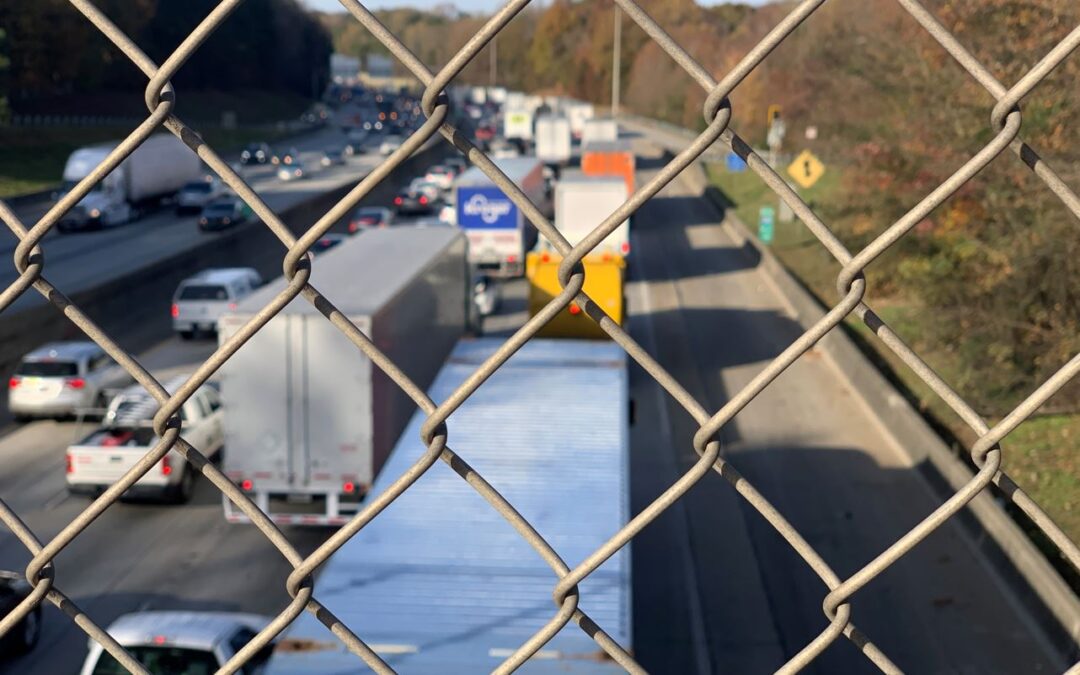
Another reality shaping this corridor is continued growth in Gwinnett County and increasing freight moving 24 hours a day. As the region adds population, jobs, and freight activity, more trips will naturally pass through Tucker. I-285 was designed as a regional bypass and a critical freight spine, not a local main street. Over time, volumes on the corridor will continue to increase regardless of local land use decisions.
The question becomes less about whether traffic exists, and more about how that movement is managed and separated so it does not overwhelm local streets and daily life.
Connectivity and Long-Term Positioning
Years ago, places such as Perimeter Center and Cumberland established their regional role in part because they achieved a high level of connectivity, and then spent decades investing to manage the traffic and spillover that came with growth. For Tucker to feel and function more like those centers, a similar level of access is the key.
Express lanes introduce that kind of connection while helping avoid the congestion patterns that often accompany growth. As regional trips shift back to the freeway system, and cut-through traffic between Northlake Parkway and Cooledge Road to US 78 is expected to drop significantly. This eases pressure on neighborhood streets and intersections.
When that level of access is missing, regions tend to see major employers and long-term investment gravitate toward places that offer more predictable mobility. Without an express lane connection, Tucker would simply be competing from a weaker position in that regional landscape.
Seen in that light, the Northlake Parkway express lane access becomes more than a transportation improvement. It begins to look like an economic and social asset.
From Infrastructure to Placemaking
Regions that mature well over time tend to combine access, clarity of vision, and coordinated land use. The Northlake end of Tucker will have a level of regional connectivity that many emerging districts never reach. That connectivity changes the kinds of conversations that become possible about future investment and identity.
At the Tucker-Northlake CID, much of our work is oriented toward long-term value rather than short-term wins. Infrastructure on its own does not create great places, but it often sets the conditions for them to emerge. The translation from access to lasting community value usually shows up through thoughtful planning, quality development, walkable connections, and a shared sense of direction.
This is one reason the upcoming One Northlake Livable Centers Initiative (LCI) planning effort carries weight. LCI plans function as more than technical documents. They shape how decision makers, property owners, investors, and residents imagine the future of a place. Express lane access adds credibility to those conversations by grounding vision in real, tangible infrastructure and regional connectivity.
Looking Ahead
The relationship between regional infrastructure and local quality of life matters. Street design, trail connections, safety, and everyday usability determine whether large investments translate into daily benefit for the people who live and work nearby. When those systems reinforce one another, the results tend to be a place that feels easier to navigate, is more connected, and more resilient over time.
The express lanes are not an endpoint. They represent a platform of opportunity whose benefits can extend over decades.
More information on the project can be found at the Georgia Department of Transportation’s I-285 Eastside Express Lanes Virtual Meeting Room.