

The discussion around parking in Downtown Tucker has been going on for years. Some believe there is not enough parking, while others say they can always find a space. The key is understanding the full picture. Here is a look at the numbers, the planning, and the potential next steps.
How Much Parking Is There Near Main Street?
There are over 1,000 parking spaces within a block of Main Street. Most are private. Lots owned by Tandem Bank, Matthews, Cofer Brothers, and others are serving the needs of their customers. That private parking is functioning as intended.
What about public spaces anyone can use? Within one block of Main Street, there are:
- 177 public parking spaces in the right of way, including the 27 new spaces along Railroad Avenue adjacent to the Tucker Town Green and 25 other reclaimed spaces
- 13 additional spaces leased by the City from CSX across from Village Shoe on Railroad Avenue
- 101 shared use spaces through an agreement with Main Street Church at Church Street and Fourth Street, available Monday through Saturday, 7 a.m. to 8 p.m.
If you are willing to walk slightly farther there are:
- 36 spaces at the Church Street Green
- 5 parallel spaces on First Avenue
That means there are:
- 231 spaces available 24 hours a day, 7 days a week
- 101 additional spaces available during peak daytime hours (Monday through Saturday, 7 a.m. to 8 p.m.)
This brings the total to 332 publicly accessible spaces on or within close proximity of Main Street. The City’s shared parking map identifies the location of most of these spaces.
To some, the shared spaces at Main Street Church may feel like a long walk to businesses closer to the Tucker Town Green. Former Mayor Frank Auman pointed out that the distance from those spaces to the intersection of First Avenue and Main Street is roughly the same distance as walking from the former Sears to Macy’s inside Northlake Mall.
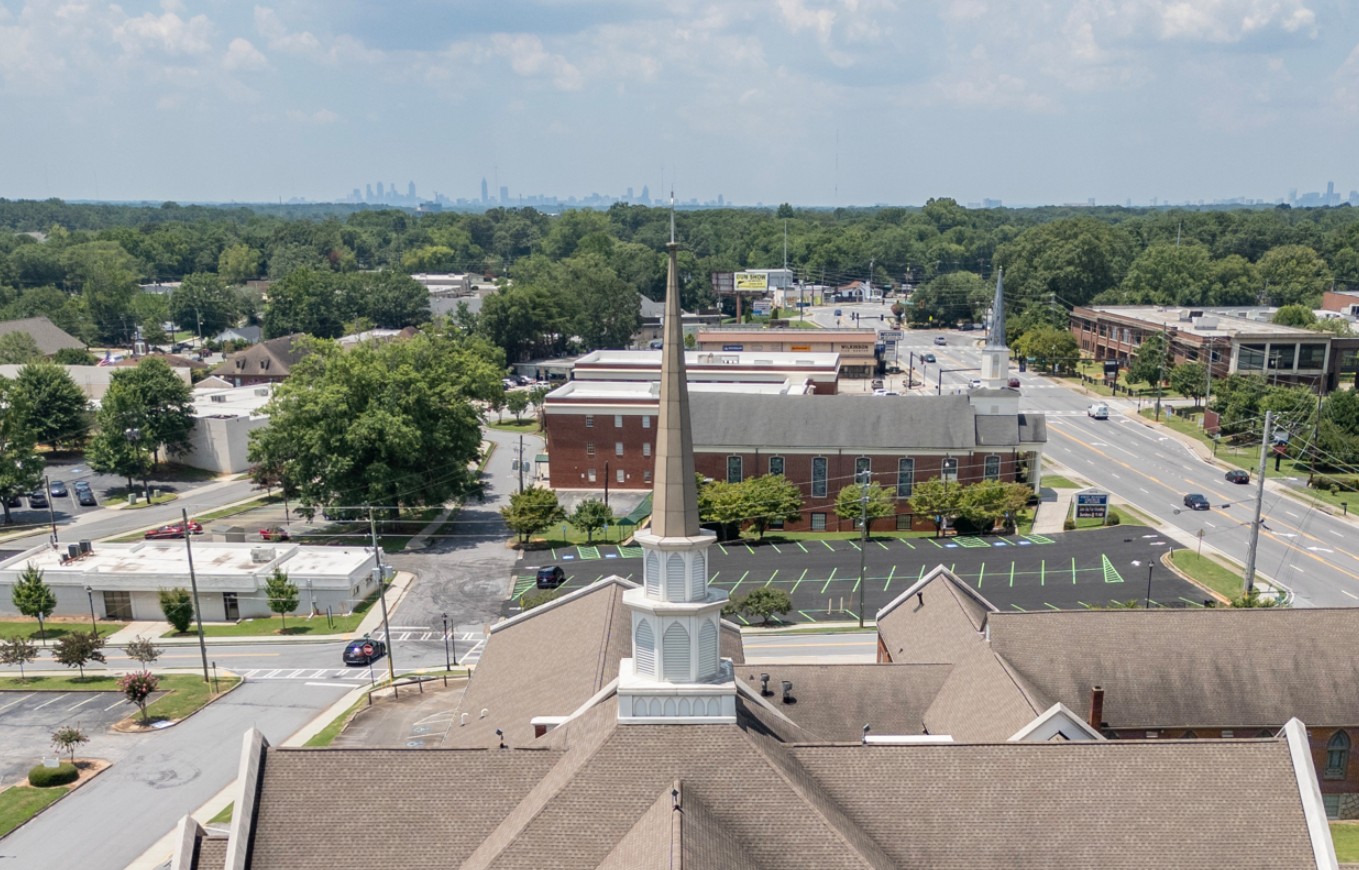
The walk may feel longer because it is not lined with storefronts the entire way, but it is not a significant hike for most. By walking standards, people generally have to reach a quarter mile in a single trip before it feels long. The distance from the Main Street Church lot to First Avenue is roughly half that. Teenagers traverse the full length of Main Street several times a day without a second thought.
Does Downtown Tucker Have Enough Parking?
In 2017, the Urban Land Institute conducted a parking study for the Tucker-Northlake CID to address that question. At the time, the study found a shortage of 74 spaces when combining public and private parking under then existing zoning standards. The study recommended a range of options, from shared parking agreements to meters and a potential parking garage.
It is important to remember that the City government was less than 18 months old at that time. There were neither the funds nor the staffing levels to immediately address parking challenges.
Since then, with 52 new and reclaimed right of way spaces and 101 shared spaces added, Tucker has cleared that original deficit by 79 spaces.
However, zoning standards measure theoretical demand, not real world behavior. No one is declaring “mission accomplished.” As downtown activity increases, demand naturally shifts. There is more work to do.
Ideally, many of the employees of Main Street businesses will choose to use the shared parking option rather than parking in front of businesses during their shifts.
Why a Town Green Instead of a Parking Garage?
Some have questioned why Tucker invested in a Town Green rather than a parking garage. Vacancies on Main Street are not simply a rent issue. They are often an access issue. Access drives sales. Sales support rent. Rent sustains business.
The 2017 parking study reopened conversations about older ideas, including a 1964 redevelopment proposal that recommended adding a surface lot along Railroad Avenue. But was that the highest and best long term use of that land? No.
For years, activity on Main Street centered around a private parcel known as Freemasons Square, now the patio of Ford’s BBQ. The downtown core needed a larger public gathering space away from traffic. Businesses wanted public restrooms. The community needed room to gather beyond sidewalks.
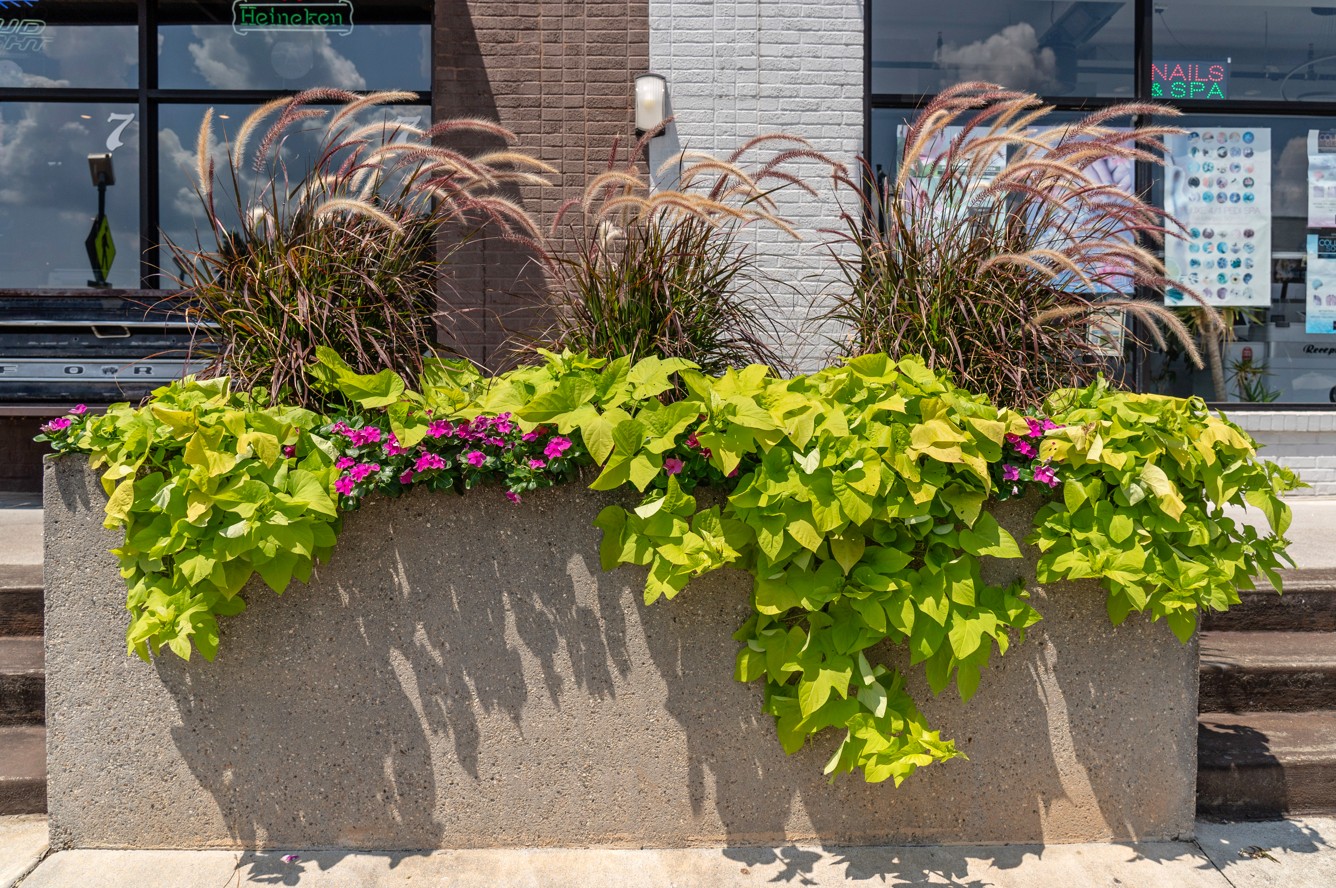
The decision to create the Tucker Town Green rather than a parking lot was about drawing people into the downtown core. In less than six months, the Town Green has done what a parking structure could not have done. More people are coming earlier in the day and staying longer. Location analytics confirm that the Town Green benefits every customer facing business in the downtown core.
Why Not Build a Parking Garage Somewhere Else?
The challenge with parking garages is cost and land. An above ground parking structure can cost up to $35,000 per space. A 300 space garage would cost as much as $10.5 million. That is before land acquisition, financing, and long term maintenance. For the City to fund that kind of project at this time, it would likely require pausing or delaying other projects across the City.
Then there is the land question. South of Lavista Road, between Fellowship Road and Lawrenceville Highway, there are more than 150 parcels and most have separate owners. That fragmentation has limited large scale redevelopment for decades and makes assembling land for any purpose, including a garage, extremely difficult.
From both a financial and land use perspective, the City has other options to pursue before committing to a parking structure. Options that spread parking out, rather than consolidate it to one location.
What Are Tucker’s Next Steps?
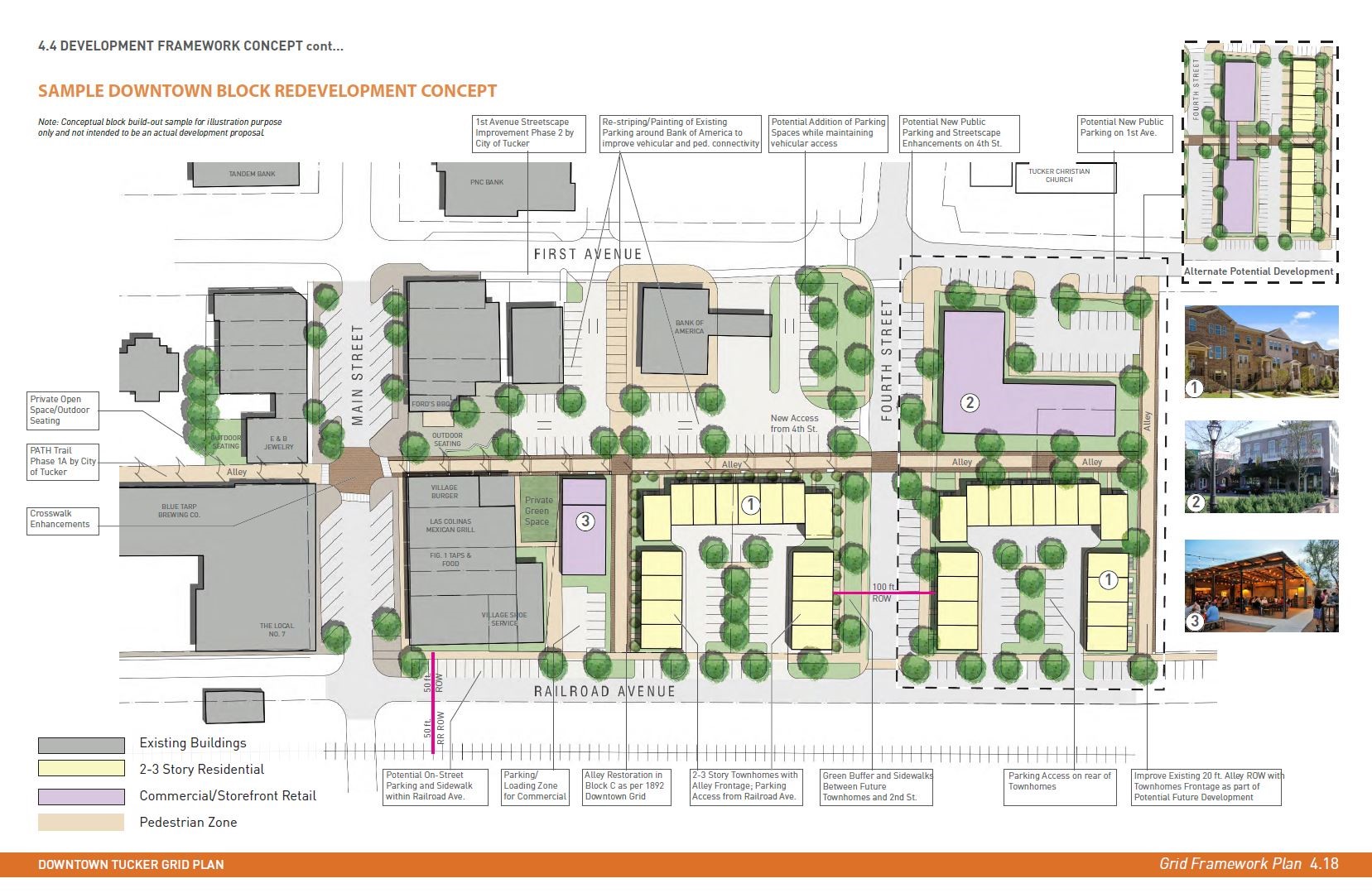
Sometimes the path forward is found by looking at an old map. The Downtown Tucker Grid Plan revealed that the City owns more right of way than many realized. Enough to consider transforming Fourth Street into a secondary Main Street corridor.
The City is considering reclaiming its right of way along Fourth Street to eventually accommodate 40 or more additional spaces while expanding walkable commercial frontage. The land is already public. In other words, this about the timing of the decision, not a land acquisition problem.
The Main Street streetscape improvements demonstrated that attractive, walkable streets attract reinvestment. They helped facilitate property sales and brought new businesses like Local 7 to Main Street. There are also opportunities to develop additional right of way parking on other streets and to examine limited hour parking in front of businesses to improve turnover.
And access to downtown will not always be measured only in cars. Once the pedestrian bridge across Fellowship Road is installed, and trail connections to Northlake Mall and the Southfork Peachtree Creek Greenway are completed, thousands of residents will have safe access to Downtown Tucker on foot or by bike. The accessibility of the two alleys west of Main Street has already increased pedestrian safety, social connectivity and gives everyone a preview of what’s to come.
The Bigger Picture
Parking is not just about spaces. It is about access, economics, expectations, and execution. Downtown Tucker is growing. As it grows, demand will evolve. The question is not whether we can build more asphalt. The question is whether we are shaping a downtown people want to visit, linger in, and invest in.
Great downtowns are not built around parking lots. They are built around places. The strategy in Tucker has been to create destinations first, then manage access intentionally and incrementally as demand increases.
Parking is part of the equation. It is not the vision. The larger vision is a downtown that works for all.